
How to Prepare Your Site for a Metal Carport in Norway SC
By Dubya Carports | July 19, 2026 | 8 min read
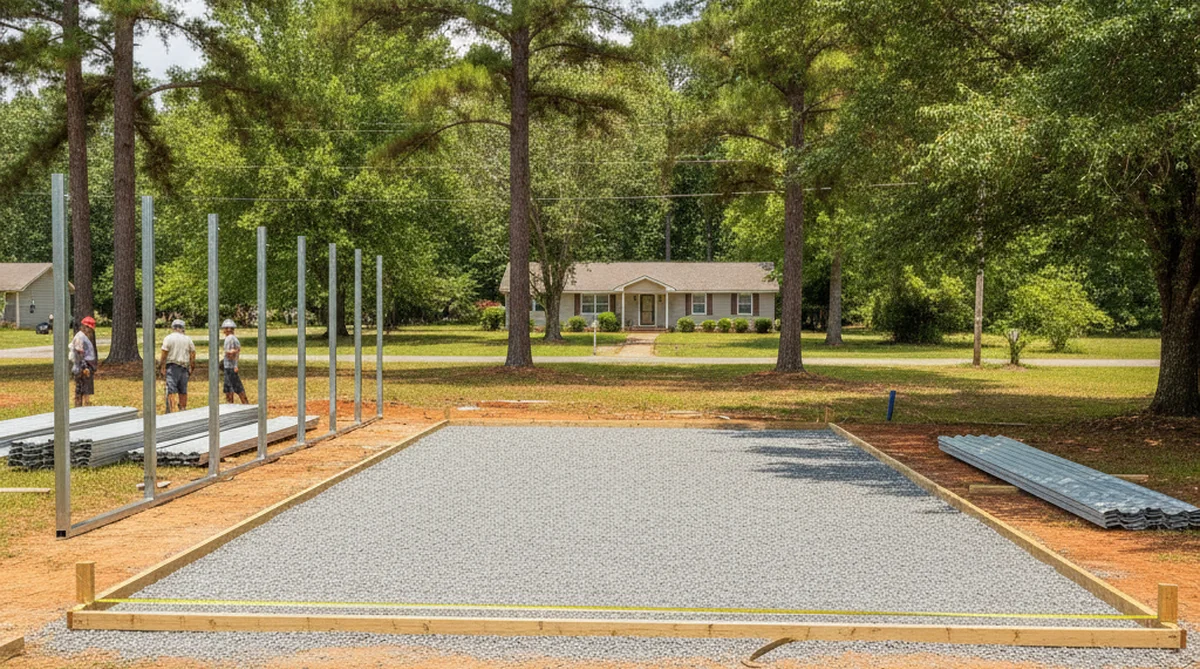
Preparing your site for a metal carport in Norway, SC requires clearing and leveling the area, ensuring proper drainage, checking local permits, and confirming ground conditions can support the structure. Proper site preparation ensures your carport installation goes smoothly and your structure remains stable for decades to come.
Why Site Preparation Matters for Metal Carport Installation in Norway SC
Site preparation is the foundation of a successful metal carport installation that will protect your vehicles and equipment for years to come. In Norway and throughout Orangeburg County, the clay-rich soil and seasonal weather patterns make proper ground preparation especially important. A well-prepared site prevents water pooling, reduces settling, and ensures your carport remains level and structurally sound. When you invest in a quality structure from an authorized Eagle Carports dealer like Dubya Carports—featuring heavy-gauge 2x2 square tube metal construction—you want to make sure the site is ready to support that investment properly.
Measuring and Clearing Your Installation Area
The first step in site preparation is accurately measuring and clearing the area where your metal carport will be installed. You'll need to measure a space that extends at least two feet beyond the carport dimensions on all sides to allow for proper installation and water runoff. Clear the area of all vegetation, rocks, debris, and any obstacles like tree stumps or old fence posts. In Norway's climate, it's also wise to remove any organic material that could decompose and cause settling over time. Mark the corners of your installation area with stakes and string to visualize the footprint and ensure you have adequate clearance from property lines, existing structures, and utilities.
Leveling and Grading for Proper Drainage
A level foundation is critical for the structural integrity of your metal carport, but you also need to plan for water drainage to prevent problems down the road. The site should be graded with a slight slope—about one inch per ten feet—to direct water away from the carport area. This is particularly important in Orangeburg County where heavy summer thunderstorms can dump significant rainfall in short periods. If your property has poor natural drainage, you may need to install French drains or create swales to channel water away from the structure. For areas with challenging terrain, you might consider a gravel base that promotes drainage while providing a stable surface. A properly graded site protects both your carport structure and the vehicles or equipment stored beneath it.
Understanding Ground Anchoring Requirements
Metal carports must be securely anchored to withstand South Carolina's weather conditions, including strong winds and occasional severe storms. The anchoring method depends on your ground conditions and the type of foundation you choose. For installations on concrete slabs, anchor bolts are embedded during the pour or installed with expansion bolts afterward. For ground installations on soil or gravel, mobile home anchors (also called earth augers) or concrete footers are typically used. The heavy-gauge 2x2 square tube construction of Eagle Carports structures provides superior strength, but proper anchoring is essential to transfer wind loads safely into the ground. Before installation day, discuss your specific ground conditions with your installer to ensure the right anchoring system is specified for your Norway property.
Checking Permits and Setback Requirements in Norway SC
Before beginning site preparation, you need to verify local permit requirements and setback regulations in Norway and Orangeburg County. Most metal carport installations require a building permit, and there are typically minimum distance requirements from property lines, septic systems, and other structures. Contact the Orangeburg County Building Services Department to determine what permits you'll need and what inspections may be required during and after installation. Some homeowners associations in the area may have additional restrictions on carport placement, size, or appearance. Getting this information early prevents costly mistakes and ensures your project proceeds without delays. Call Dubya Carports at (803) 855-1857 to discuss your project—we can help guide you through the local permitting process and ensure your site preparation meets all requirements.
Choosing Between Dirt, Gravel, and Concrete Foundations
Norway-area property owners have three primary foundation options for metal carport installation, each with distinct advantages. A dirt foundation is the most economical option—the ground is simply leveled and compacted, then the carport is anchored directly into the soil. A gravel foundation adds a layer of crushed stone (typically 4-6 inches deep) over compacted soil, providing better drainage and a cleaner surface while remaining cost-effective. A concrete slab offers the most permanent and maintenance-free foundation, creating a solid floor that's easy to keep clean and prevents vegetation growth. Many Norway residents choose gravel as a middle-ground solution that balances cost with functionality, though concrete is ideal if you plan to work on vehicles or need a completely sealed space. Consider your budget, intended use, and how long you plan to keep the structure when making this decision.
Utility Location and Final Pre-Installation Checklist
Before any digging or ground preparation begins, you must have underground utilities located and marked on your property. Call 811 or South Carolina 811 at least three business days before your planned start date to have electric, gas, water, sewer, and communication lines marked at no charge. This free service protects you from costly utility damage and potential safety hazards. Once utilities are marked, complete your pre-installation checklist: confirm your site is cleared and level, verify drainage is adequate, ensure anchoring materials are on hand, check that permits are approved, and confirm your installation appointment. Whether you're installing a metal carport or one of Dubya Carports' traditional pine pole barns, thorough preparation ensures installation day goes smoothly and your new structure serves you well for decades in Norway's climate.
Frequently Asked Questions
Do I need a permit for a metal carport in Norway SC?
Most metal carport installations in Norway and Orangeburg County require a building permit from the county Building Services Department. Permit requirements depend on the size of the structure and its proximity to property lines, so it's best to check with the county before beginning your project.
How level does the ground need to be for a metal carport installation?
The installation site should be level within 3-4 inches across the entire footprint for proper carport assembly and structural integrity. While a slight grade for drainage is beneficial, any significant slope should be corrected with grading or a leveling foundation before installation.
What is the best foundation for a metal carport in Orangeburg County?
A gravel foundation offers the best balance of cost and performance for most Orangeburg County installations, providing good drainage and a stable base. However, concrete slabs are ideal for long-term installations where you want a finished floor, while compacted dirt works for budget-conscious projects with good natural drainage.
How far in advance should I prepare my site before carport installation?
You should begin site preparation at least 2-3 weeks before your scheduled installation date to allow time for permits, utility location, clearing, and any necessary grading work. This timeline also provides a buffer for weather delays, which can be common during Orangeburg County's rainy season.
Can I install a metal carport on sloped ground in Norway SC?
Yes, but the slope must be addressed through proper site preparation including grading, leveling, or building up one side with compacted fill material. Significant slopes may require a concrete foundation with footers at different heights to create a level installation surface for the carport frame.
Published July 19, 2026 | Dubya Carports serves Orangeburg, Sumter, Summerville, Bamberg, Holly Hill, and surrounding counties in the SC Midlands.
Get a Free Estimate
Custom carport installation in Orangeburg County. Call us today for a no-obligation quote.
(803) 855-1857 Free Estimate Form