
How to Anchor a Metal Carport on Different Foundation Types in Sumter
By Dubya Carports | May 24, 2026 | 8 min read
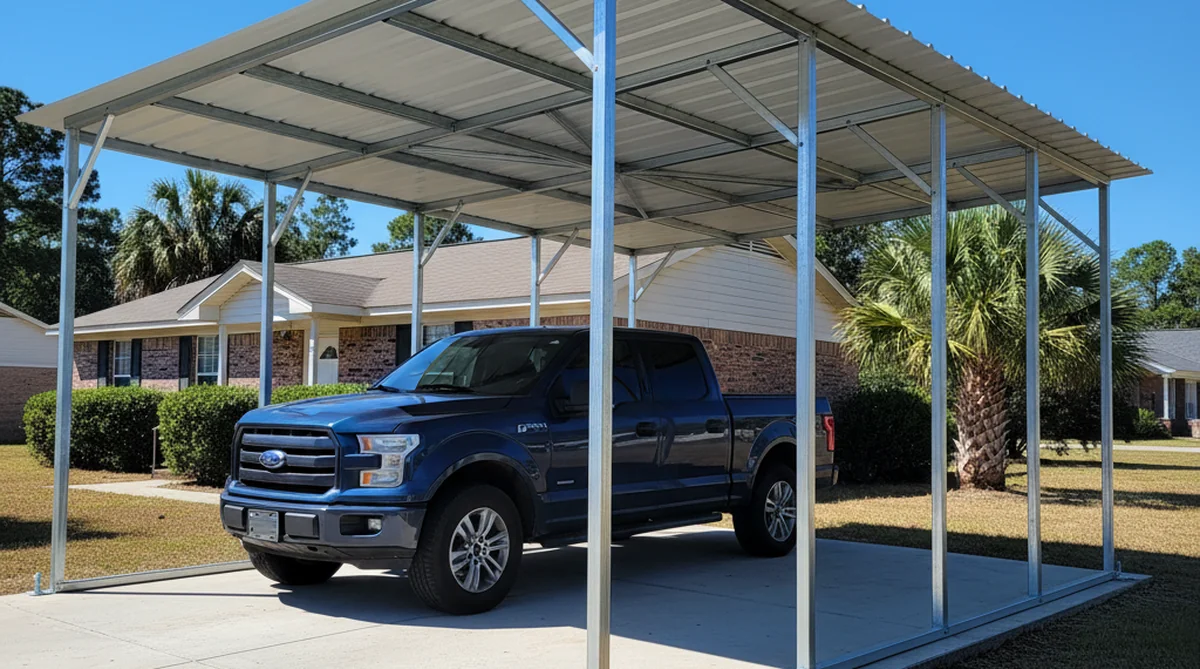
Anchoring a metal carport in Sumter requires selecting the right foundation type for your soil conditions and budget, then using appropriate anchors such as ground augers for dirt, concrete wedge anchors for slabs, or mobile home anchors for gravel bases. Proper anchoring protects your investment from South Carolina's high winds and severe weather while ensuring long-term structural integrity.
Why Foundation Type Matters for Metal Carport Anchoring in Sumter
The foundation type you choose directly determines which anchoring method will provide the most secure installation for your metal carport. Sumter's clay-heavy soils and exposure to tropical storms and high winds make proper anchoring absolutely critical for protecting your vehicles and equipment. Different foundation types—whether dirt, concrete, gravel, or asphalt—require specific anchor hardware and installation techniques to achieve maximum holding strength.
At Dubya Carports, we work with customers throughout Orangeburg County to assess soil conditions and recommend the best foundation and anchoring combination. As an authorized Eagle Carports dealer, we install heavy-gauge 2x2 square tube metal carports and garages that are engineered to withstand severe weather, but they must be properly anchored to perform as designed. The investment you make in quality anchoring today prevents costly repairs or replacement after the next storm rolls through Sumter.
Anchoring Metal Carports to Dirt or Bare Ground Foundations
Ground auger anchors provide the most reliable anchoring solution when installing a metal carport directly on bare ground or compacted dirt. These heavy-duty spiral anchors twist deep into the soil—typically 24 to 36 inches—creating exceptional holding power that resists uplift forces during high winds. For Sumter's clay-rich soils, auger anchors grip especially well once properly set.
The installation process involves using a steel rod or small excavator to drive the augers into the ground at each vertical post location. Once installed, the carport's base rails bolt directly to the auger's attachment point, creating a secure connection that distributes wind loads into the ground. This method works particularly well for residential properties in Sumter where concrete pads aren't necessary or desired. Most building codes require inspection of anchor installation, so check with Sumter County building officials before beginning your project.
Mobile home anchors offer an alternative for dirt installations, featuring arrow-shaped blades that drive deep into the ground. While slightly less expensive than auger anchors, they provide comparable holding strength when installed correctly in stable soil conditions.
Securing Carports to Concrete Slab Foundations
Concrete wedge anchors or expansion bolts are the preferred anchoring method when installing metal carports on existing concrete slabs or newly poured foundations. These anchors create an incredibly strong mechanical bond by expanding inside pre-drilled holes in the concrete, making them ideal for the permanent installations many Sumter homeowners prefer.
To install wedge anchors properly, mark each carport leg location on the concrete, then drill holes using a rotary hammer drill with a masonry bit matched to your anchor size—typically 1/2-inch or 5/8-inch diameter. The holes should extend at least 1/2 inch deeper than the anchor's embedment depth to allow for dust accumulation. After cleaning the holes thoroughly, insert the anchors through the carport's base plates and tighten the nuts to the manufacturer's specified torque, which causes the anchor to expand and lock into the concrete.
For optimal results in Sumter's climate, use galvanized or stainless steel anchors to prevent rust and corrosion. A minimum concrete thickness of 4 inches is required, though 6 inches provides better holding strength for larger carports. If you're planning a concrete foundation specifically for your metal carport, consider pouring a 4-inch slab with 3000 PSI concrete and wire mesh reinforcement.
Installing Anchors on Gravel or Crushed Stone Bases
Gravel foundations require a combination approach that reaches through the loose stone into the stable soil beneath. The most effective method uses ground auger anchors or mobile home anchors that penetrate through the 4-6 inches of gravel and extend deep into the compacted earth below, providing the solid grip necessary to resist uplift forces.
Before anchoring, ensure your gravel base is properly prepared with landscape fabric underneath to prevent weed growth and settling. The gravel should be compacted and leveled, creating a stable working surface. When driving anchors through gravel, you may need to clear small areas at each post location to ensure the anchor starts straight and true. Once anchored, the gravel can be redistributed around the base plates for a clean appearance and proper drainage.
Many Sumter property owners choose gravel foundations because they're cost-effective, provide excellent drainage during heavy rains, and can be installed quickly. If you're considering this option for your Eagle Carports metal structure, call Dubya Carports at (803) 855-1857 to discuss the best anchoring strategy for your specific location and soil conditions.
Anchoring Considerations for Asphalt Foundations
Asphalt presents unique challenges for metal carport anchoring because it's softer than concrete and can deteriorate over time, especially in Sumter's hot summers where temperatures regularly exceed 90 degrees. The most reliable approach involves drilling through the asphalt layer and anchoring into the compacted base or soil beneath using ground augers or long concrete anchors if there's a concrete base under the asphalt.
If you must anchor directly into asphalt, use specialized asphalt anchors with large washers or base plates that distribute loads across a wider surface area. However, understand that asphalt anchors provide less holding strength than concrete or ground anchors and may require periodic inspection and tightening as the asphalt ages and shifts. In many cases, removing small sections of asphalt at post locations and pouring concrete footings provides a more permanent and secure solution.
Special Considerations for Sumter's Climate and Building Codes
Sumter's location in central South Carolina means your metal carport must withstand high winds from tropical systems, heavy rain, occasional ice storms, and intense summer heat. When anchoring any metal structure, consider the local wind load requirements—typically 130-140 mph for certified installations in this region—and ensure your anchoring method meets or exceeds these specifications.
The heavy-gauge 2x2 square tube construction of Eagle Carports structures provides superior strength compared to lighter-gauge alternatives, but proper anchoring remains essential for warranty coverage and structural performance. Dubya Carports ensures every installation throughout Orangeburg County meets local building codes and manufacturer specifications. We also offer traditional pine pole barns for customers who prefer post-in-ground construction, which provides its own built-in anchoring system.
Before beginning any carport installation in Sumter, check whether a building permit is required. Most permanent structures need permits, and inspectors will verify that anchoring methods meet code requirements. Proper documentation of your anchoring system also helps with insurance claims should storm damage occur, proving your structure was installed to professional standards.
Frequently Asked Questions
What is the strongest way to anchor a metal carport in Sumter, SC?
Concrete wedge anchors installed in a properly poured concrete slab provide the strongest anchoring method for metal carports. For dirt installations, ground auger anchors driven 30-36 inches deep offer excellent holding power in Sumter's clay soils and can withstand the high winds common to the region.
How deep should ground anchors go for a metal carport?
Ground auger anchors should penetrate at least 24-30 inches into stable soil for standard carports, with 36 inches recommended for larger structures or areas with high wind exposure. The depth ensures the anchor reaches below the frost line and into undisturbed soil for maximum holding strength.
Can I install a metal carport on gravel without a concrete foundation?
Yes, you can install a metal carport on gravel by using ground auger anchors or mobile home anchors that penetrate through the gravel layer into the stable soil beneath. The key is ensuring the anchors extend deep enough—typically 24-30 inches into the dirt below the gravel—to provide adequate holding power.
Do I need a building permit to anchor a carport in Sumter County?
Most permanent metal carport installations in Sumter County require a building permit, especially if the structure exceeds certain size thresholds or involves concrete work. Contact the Sumter County building department before installation to determine specific permit requirements and ensure your anchoring method meets local building codes.
How much does it cost to properly anchor a metal carport?
Anchoring costs vary by foundation type, ranging from $200-$400 for ground auger anchors on dirt to $300-$600 for concrete wedge anchors on an existing slab. If you need to pour a concrete foundation, costs increase to $4-$8 per square foot depending on thickness and site preparation requirements.
Published May 24, 2026 | Dubya Carports serves Orangeburg, Sumter, Summerville, Bamberg, Holly Hill, and surrounding counties in the SC Midlands.
Get a Free Estimate
Custom carport installation in Orangeburg County. Call us today for a no-obligation quote.
(803) 855-1857 Free Estimate Form